
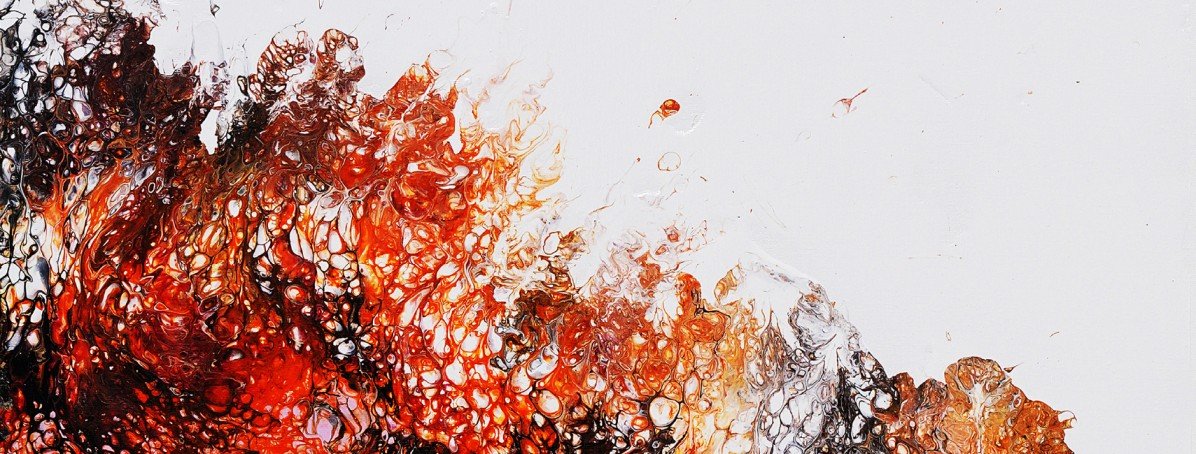
A Dance of Colours & Chance
Standing before a piece of Fluid Art can feel like looking into a moving sea. Colours seem to float and swirl across the surface, creating forms that feel alive. Behind the beauty is a mix of artistic intuition, scientific principles, and a willingness to let chance take part in the process.
Artists use acrylic paints thinned with water or special mediums, allowing them to flow across the canvas. As the paint moves, it interacts in unpredictable ways. The results are never the same, much like the way clouds shift or water ripples in the wind.
The History Behind Fluid Art
- Persian Marbled Paper (Ebru)
In Persia, artists made marbled paper by floating paint on water thickened with natural gums. The surface design was swirled gently with combs or sticks, then transferred to paper. Each sheet had its own pattern and was valued for its originality. - Japanese Suminagashi (Floating Ink)
More than a thousand years ago in Japan, artists created suminagashi by dropping ink onto still water. The ink spread into soft rings or waves before paper was placed on the surface to capture the design. - Indian Dye Traditions
In Rajasthan, the tie-dye technique known as Bandhani involves folding or tying fabric before dipping it into dye baths. The dye seeps in at different rates, creating patterns that are never exactly alike. Mehndi artists also work with flowing material, allowing henna paste to form intricate designs on the skin. - Ancient Pigments and Colour Journeys
Colours themselves have long histories. Lapis lazuli from Afghanistan was once ground into ultramarine for Mughal miniature paintings. Natural ochres have decorated Indian caves for thousands of years. These pigments connect cultures, trade, and the human fascination with colour.
How Fluid Art Works
In Fluid Art, each colour behaves in its own way. A strong red might spread quickly, while a deep indigo might hold its place. Metallic paints can drift slowly across the surface, catching light in their path. The artist may tilt the canvas, pour the colours in a certain order, or guide them gently, but the final movement belongs to the paint.
The results can suggest places and textures found in nature. A single pour might resemble tree roots in the Sundarbans, windswept sand in the Thar desert, or the surface of a pond after heavy rain.
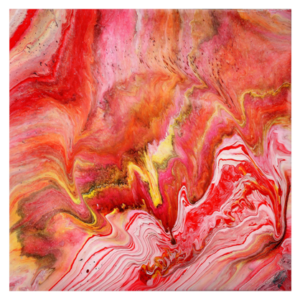
This art piece by Lachman Ludhani: Blooming of a Rose Bud, bursts with warm tones of red, orange, and gold, flowing together in swirling patterns that evoke the richness of silk sarees and the glow of festive lights. Hints of yellow add brightness, while soft gradients create depth and movement. Its colours and energy would complement an Indian home beautifully, whether placed in a living room, dining area, or hallway, where it can echo the warmth, hospitality, and celebratory spirit often found in Indian interiors. Buy a digital print of this stunning art work today!
When Colours Meet
One of the most striking moments in this process is when two colours touch and interact. Turquoise can soften into saffron, producing a shade that cannot be found in a paint tube. Copper might move through deep green like coins scattered across moss. These effects are brief, appearing only while the paint is still moving.
Similar unpredictability exists in traditional crafts. Bronze temple bells change colour over the years as their surfaces react to air and touch. Ikat weaving allows dye to enter threads in uneven ways, giving each piece its own character.
Why No Two Pieces Are Alike
Even if the same colours and pouring methods are used, no two Fluid Art pieces will ever match. The flow of paint, the timing, and the way pigments interact create a unique record of a single moment.
Owning a piece of Fluid Art means having more than an image on a wall. It is a preserved instance of movement, where colour and chance worked together in a way that can never be repeated.
Bringing The Experience Home
Lachman Ludhani, a seasoned real estate developer and the esteemed chairman and director of Evershine Group, has always been driven by creativity, vision, and the power of imagination throughout his professional journey. Known for his constant quest to learn and evolve, he has now, in his late 70s, embarked on a new chapter as a painter of Fluid Art, honoring the memory of his late wife, Mira Ludhani.
His art is a reflection of his deep emotions, boundless creativity, and keen attention to the world around him. Each piece he creates is a vibrant expression of color, with every hue carrying a profound meaning and every stroke serving a purpose on the canvas. Explore his full collection of resplendent works, where every artwork tells a story and every moment is captured in vivid detail.
Explore our curated Fluid Art collection and choose the piece that speaks to you!