
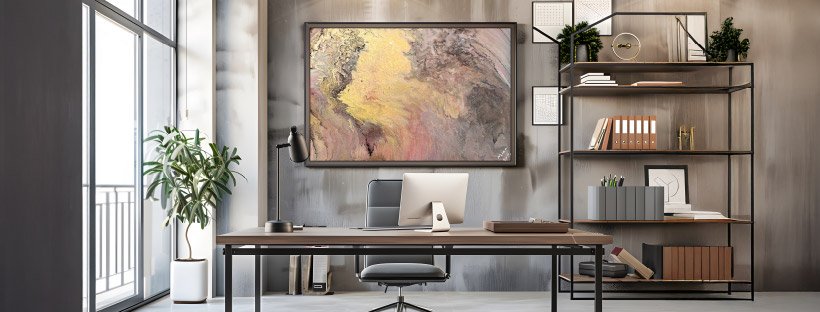
Spending long hours at a desk is norm. What can keep you steady through meetings, calls, and deadlines is a space that feels clear, welcoming, and easy on the eyes. Art is a simple way to set that mood. You do not need a large budget, only a plan that respects how you work and what your room can hold. This guide keeps the focus on you, not on design jargon, and uses two paintings from MiraArts as examples to show what works well in real rooms.
Start with how you want to feel
Before choosing colours, frames, or file sizes, ask one question. Do you want energy for brainstorming or a calm setting for deep focus. Your answer decides everything that follows. For energy, look for flowing lines and strong contrast that move the eye across the canvas. For calm, choose gentler transitions and slimmer accents that let the gaze rest. Keep two or three colours consistent with your chair fabric, rug, or wall paint so the room looks intentional without feeling loud.
Place art where it helps the eyes
Position artwork at eye level when seated, typically the middle of the piece at about 110 to 120 cm from the floor. This reduces neck strain and makes video calls look tidy. Keep at least a hand’s width between the top of your monitor and the bottom of the frame so your attention can shift easily. Avoid direct sunlight on canvases because colours can fade. If a wall gets strong sun, fit UV glass for prints and use a light curtain.
Light is your trusted assistant
Good lighting is half the job. Warm white bulbs keep reds, ochres, and earthy tones rich. Daylight bulbs keep blues and greens crisp. Use one wall light to define the artwork and one desk lamp for task work. If your wall has texture or glitter, a soft side light will reveal depth without glare. In small rooms, prefer matte frames and avoid heavy glass that reflects screens.
Why fluid art helps during work
Fluid art has movement that is not rigid. Lines fold into each other, colours meet in soft borders, and the mind reads new shapes every time. This keeps thinking flexible when a project needs fresh angles. It also brings emotion in a quiet way, which is useful when you want the room to feel alive but not busy. A single fluid canvas becomes a gentle anchor for a workspace where decisions are frequent and time is tight.
Digital prints for everyday convenience
Many teams and office spaces need quick changes. Prints make it easy to refresh walls without long lead time. Files can be sized for a study, a compact desk corner, or a reception area without losing quality. For this reason, digital art for office is a practical option when you have to set up or move rooms fast while keeping colour and proportion consistent across locations.
Two MiraArts paintings that explain the idea
1) “What a Butterfly Leaves on a Flower”
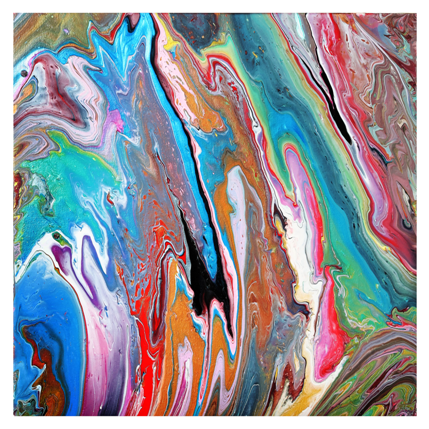
Think of a close look at the colour after a butterfly brushes past a bloom. The painting holds rivers of teal, turquoise, coral, and soft white, with a confident black streak that forms a pause point. Metallic touches catch the light during the day and create small glints by evening. This work suits a desk that needs a lift without feeling noisy. Place it near natural light and pair it with a slim white or natural wood frame. The varied movement helps during tasks that call for ideas and clarity.
2) “Rain on a Window Pane”
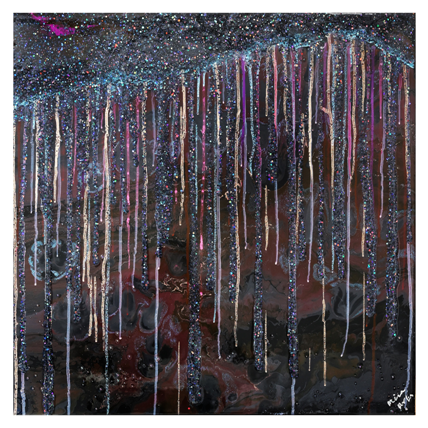
This canvas reads like a night shower seen through glass. Deep blues and clove brown rest behind long silver and lilac drips, like raindrops forming trails. The effect is calm and steady. It works well in meeting rooms, study corners, and cabins where measured thinking is important. A matte frame and a warm lamp keep reflections under control, especially when screens are close by.
MiraArts is full of such fluid paintings made by Lachman Ludhani. These two are examples that show how colour flow and texture can support everyday work without distracting from it. When choosing from a larger collection, use the same approach. First decide the mood, then match size, light, and placement.
A simple selection checklist
- Choose one textured canvas and one clean print, the pair gives balance.
- Keep frames slim, either white, natural wood, or soft black, so the art leads.
- Leave white space around the piece, about one third of the wall if possible, to reduce visual fatigue.
- For open seating areas, prefer prints for easy upkeep and safety.
- If the desk is near a window, angle artworks slightly to avoid a direct reflection.
- Keep a microfiber cloth handy and dust frames weekly. In monsoon months, consider a small dehumidifier near canvases.
- For offices in Indian cities, check that AC vents do not blow directly on art, and avoid placing frames near cooking areas where oil residue can settle.
Make digital work harder for you
Files are useful beyond prints. Keep a high resolution version stored safely for a second frame, a smaller print for a study table, or a desktop wallpaper that matches the wall art. With digital art for office, maintaining a consistent look becomes easy when you move offices, repaint a wall, or expand a team. It also reduces decision fatigue because once you select a theme, sizing and framing stay flexible.
Practical sizing tips
Measure the wall first. For a desk that is 120 cm wide, a frame between 45 and 70 cm wide usually feels right. Over a sofa, keep the artwork between two thirds and three quarters of the sofa width. Tall walls accept vertical pieces that draw the eye up, while compact rooms benefit from horizontal pieces that widen the view. If you are unsure, use painter’s tape to outline the size on the wall and step back to check balance.
When to rotate and when to keep
If motivation dips or the room starts to feel stale, rotate one piece every three to four months. Art does not have to change often. The goal is to refresh your attention so that your space continues to support your day. Keep a small log with dates, locations, and frame sizes. This helps when you reuse artworks during festivals or move them between a study and a living room.
Care that suits local conditions
Dust and humidity can test both canvases and frames. If a wall is damp in monsoon, shift the artwork to a drier side and let the wall cure before rehanging. For prints, ask for archival paper and UV glass if a window faces the wall. This one-time choice keeps colours faithful for years.
Why this approach works
You start with feeling, set clear placement and light, and then choose between original canvases and prints. Fluid art keeps thinking flexible, and prints keep setup simple. The combination is practical for homes and offices that need to look good, work well on video, and stay easy to maintain. When you want a fast refresh across rooms, digital art for office gives you the speed and consistency you need.
Explore more from MiraArts here!
About Mr. Lachman Ludhani & MiraArts
Lachman Ludhani is the Chairman and Managing Director of Evershine Group in Mumbai. He introduced affordable housing and township concepts that helped many families own homes. His professional path values simplicity, hard work, and innovation for community building.
He began painting in memory of his late wife, Mira Ludhani, and named the body of work MiraArts. Time on the canvas became a way to honour love and carry it forward through colour. His paintings reflect patience, care, and gratitude, which is why they sit well in rooms made for thought and progress.