
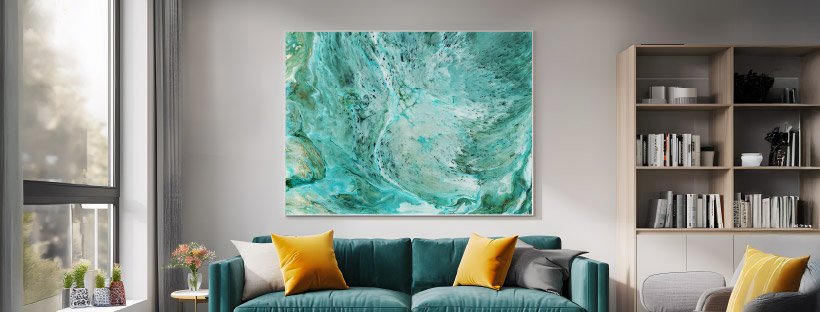
A living room carries memories, routines of all family members, celebrations and peaceful evenings, and art which becomes part of the daily rhythm. When selecting digital art for living room walls, the goal is not only to fill space but to create connection. We believe that the right artwork does not overpower a room, it speaks to it, and something inside responds.
Before selecting anything, pause and look closely at the space itself. Every home already has its own personality. The color of the walls, the amount of daylight, the style of furniture and even the everyday mood of the home creates the atmosphere where art will live. Instead of thinking of art as something to decorate it merely, think of it as something that should feel at ease with the rest of the home.
A Checklist to Make Choosing Easier
The challenge most people face is not lack of options but not knowing where to begin. Here is a simple checklist that helps clarify decisions:
-
- Wall Size and Placement
- Larger walls can hold one large piece or a grouping of medium pieces.
- Smaller spaces may look better with one focused artwork that does not overwhelm.
- Existing Colors in the Room
- Match or complement the main tones already present.
- If the room is neutral, bold art can bring life. If the room is already colorful, select art that balances rather than competes.
- Mood of the Room
- Ask what the room needs. Warmth? Stillness? Energy? Lightness?
- Choose art that supports the feeling the room should hold.
- Texture and Detail
- Some artworks have vivid textures that feel like motion. Others carry smooth, calm surfaces.
- Select according to how much visual activity the room can carry comfortably.
- Cultural and Personal Connection
- A home in India often carries family roots, traditions and personal history.
- Let the art support those values. Choose colors or themes that resonate with who you are, not only what looks stylish.
- Wall Size and Placement
Personalizing Art According to Home Design and Taste
Homes in India often have layers of memory. There may be heirlooms, gifts, handmade crafts, or devotional spaces. Digital prints make it possible to choose artwork sizes that fit around these elements rather than replacing them. Placement matters deeply. A piece that rests above the sofa may welcome everyone. A painting near a reading chair may hold focus. A piece in the hallway may offer transition between rooms.
One useful approach is to choose a central piece that anchors the room and then build smaller visual elements around it. Another way is to choose two artworks that speak to each other without being similar. For example, a warm colour painting may sit in a social area, while the cool colour expanding artwork might rest in a softer corner of the room. The dialogue between them can feel natural if spacing and light are considered.
Some examples from MiraArts
A Family of Four
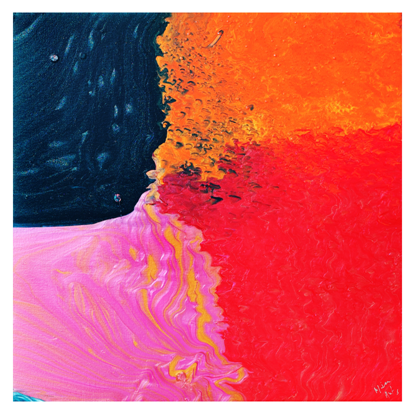
This painting carries a strong presence. The meeting of red, orange, pink and a night shade creates a sense of movement, warmth and a meeting point representing how a family functions. It draws the eye immediately, so it works best in a spot where it can be appreciated without competing with too many other elements.
Suggested placements in the living room:
- Above the main sofa: It becomes a central anchor for the room.
- On the wall facing the seating area: So it naturally becomes part of conversation.
- Behind the lounge or relaxing chair: Adds a feeling of warmth and grounded energy.
Through the Tinted Glass
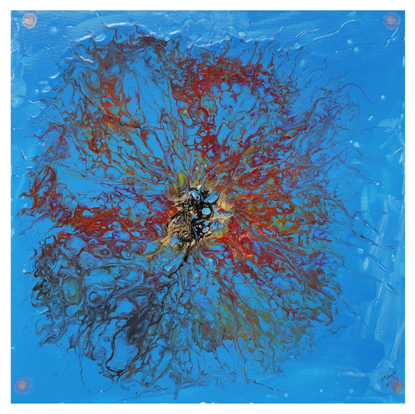
This artwork opens outwards like an expansion, a flower caught midst a seasonal bloom. The blue base creates calm, while the intricate branching forms add curiosity and depth. It has a reflective quality, so it suits areas where the room is a little calmer.
Suggested placements in the living room:
- A corner seating nook: Encourages slow viewing, ideal for reading or tea breaks.
- Near a window wall, where natural light touches it softly: Enhances the layered details.
- Above a side console or smaller storage unit: Creates a thoughtful focal point without overwhelming the space.
Rotating and Caring for Digital Art Prints
One advantage of digital prints is flexibility. There is no need to commit to one look forever.
To maintain prints:
- Keep them away from direct sunlight to prevent color fading.
- Use soft cloth to dust, avoiding chemical cleaners.
- If framed behind glass, clean the glass, not the print.
To rotate artwork occasionally:
- Swap positions every few months to refresh the room.
- Store removed prints flat and dry to protect edges.
- Let changing seasons or festivals guide rotation. A warm artwork feels right during gatherings. A calm artwork suits slow months.
Rotation keeps the home alive. It prevents visual fatigue and invites new meaning to familiar spaces.
Choosing Art That Reflects Tradition and Modern Living
Indian homes often hold both heritage and contemporary comfort. Digital art for living room walls allows this balance. Even when the art is abstract, the emotion within it can relate to devotion, celebration, nature, memory or silence, all of which are familiar to Indian sensibility. Choose according to the heart first, and style second. When the home feels sincere, everything inside it sits in harmony.
MiraArts: A Place of Expression and Memory
MiraArts is not just a collection of artworks. It is a continuation of love. Lachman Ludhani, Chairman and Managing Director of Evershine Group, has contributed to Mumbai’s housing space through simplicity in planning and service to community life. Beyond his work in real estate, he holds a gentle respect for life and the people who make a home what it is.
His journey into painting began after the passing of his wife, Mira. What started as a personal space of remembrance slowly took form through color and gesture. Painting became a way to hold feeling, memory and presence. MiraArts carries her name, honoring her warmth and grace. The artworks reflect this sense of care, depth and reflection.