
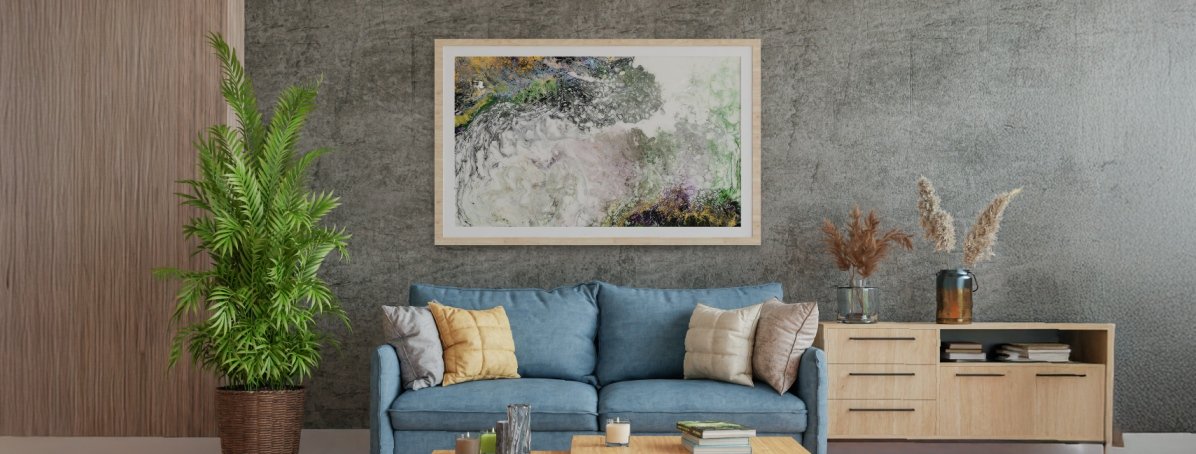
The living room serves as the definitive mirror of a home’s soul, particularly in an Indian context where every object carries a history or a hope. To introduce abstract wall art for living room settings is to invite a silent dialogue between the architecture of the space and the emotions of the inhabitants. A statement piece above the sofa is not merely a decoration; it is a curated anchor that dictates the room’s atmosphere.
How can one ensure that a digital print feels as intentional as a bespoke couture garment? The secret lies in the art of placement and the understanding of visual weight.
The Architecture of Art Placement
For those seeking a gallery finish, these technical guidelines ensure the artwork feels integrated into the home’s design.
| Rule | Requirement | Purpose |
| The Width Ratio | 60% to 75% of the sofa width | Maintains a sophisticated balance between furniture and art. |
| The Visual Gap | 6 to 10 inches from the sofa back | Prevents the piece from feeling disconnected from the seating area. |
| The Gallery Height | 58 to 60 inches from the floor to center | Aligns the abstract concept with the natural line of sight. |
| The Color Dialogue | Harmony with teak, brass, or silk | Connects modern digital prints with traditional Indian textures. |
| The Illumination | Soft, directional lighting | Accents the layers of color without creating harsh reflections. |
1. The Art of Scale
Scale is the foundation of interior design. A piece that is too small can make a large wall feel lonely, while a piece that is too wide can make the sofa look flimsy. To find the right balance, look for a piece that occupies about two-thirds or three-quarters of the width of the sofa. This ensures the wall art feels substantial enough to hold its own against the furniture.
2. The Intimacy of Proximity
Art should never feel like it is attempting to escape the room. Maintaining a gap of roughly 6 to 10 inches between the top of the sofa and the bottom of the frame ensures a cohesive unit. This physical closeness fosters an intimate connection between the viewer and the image. If the piece is hung too high, the visual tension breaks, leaving the wall feeling fragmented.
3. The Standing Perspective
In the world of high design, the center of a painting belongs at eye level. This usually translates to a point about 5 feet from the floor. While the sofa provides the horizontal baseline, the eye level provides the emotional baseline. Centering the work here allows the abstract forms to be fully absorbed whether one is entering the room or pausing to admire the view.
4. Respecting the Cultural Canvas
The modern Indian interior is a rich composition of textures, from hand carved wood to shimmering silks. An abstract piece must acknowledge these surroundings. Choosing art that features warm ochre, deep crimson, or jewel like teals can echo the opulence of Indian heritage while maintaining a contemporary edge. Does the painting speak to the grain of the wood or the lustre of the brass lamps?
5. Lighting as a Final Layer
Light is the element that breathes life into a digital print. During the day, natural light reveals the complexity of the brushwork. In the evening, soft, focused lighting can bring a sense of drama to the abstract forms. A well lit painting continues to tell its story long after the day has ended, ensuring the living room remains a place of inspiration.
The Featured Selection

‘The Sight of Flowers Chasing the Sun‘ is a profound exploration of movement and natural grace. The composition is a fluid journey, where deep emerald greens meet a surge of fiery orange and red. There is a sense of unhurried motion in the swirling teals and purples, evoking the way a garden might stir under the first golden rays of the morning.
As a digital print, it offers a crispness that suits the clean lines of a sophisticated Indian home. The piece avoids the predictability of traditional landscapes, choosing instead to represent the energy of growth and the pursuit of light. It is a work that feels both strong and sentimental, a perfect focal point for a room that values intellectual beauty.
About the Artist
Lachman Ludhani, Chairman and Managing Director of Evershine Group, is a pioneering figure in Mumbai’s real estate industry, credited with introducing affordable housing and township concepts. With a career defined by simplicity, hard work, and innovation, he has built communities that go beyond mere structures. He is deeply rooted in philanthropy, driven by a belief in giving back to the society that gave him so much.
His pursuit of painting began as a deeply personal tribute to his late wife, Mira Ludhani, for whom he started this creative journey. Through his art, he translates complex emotions into fluid, abstract forms that celebrate her memory. By offering these digital prints through MiraArts, he invites others to find peace and inspiration in his evolving artistic legacy.
Explore the MiraArts collection for your home here!